Research Progress in WP2 and WP3: Unlocking Value from Tomato Residues

Updated: Jun 25
Researchers at UNIZAG-PBF are advancing activities within WP2 - Upstream – Seed pressing, Extrusion, hydrothermal liquefaction and Algae and WP3 - Midstream – Fermentation and Lipid Extraction, exploring innovative pathways to valorise tomato processing residues.
WP2 - Upstream – Seed pressing, Extrusion, hydrothermal liquefaction and Algae activity
Within WP2, tomato seeds obtained during tomato concentrate production were processed through cold pressing to produce high-quality tomato seed oil. Following purification, the oil was analysed to determine its fatty acid composition. Results showed a high proportion of polyunsaturated fatty acids, highlighting the potential value of tomato seed-derived products.
Tomato seed oil production by cold pressing
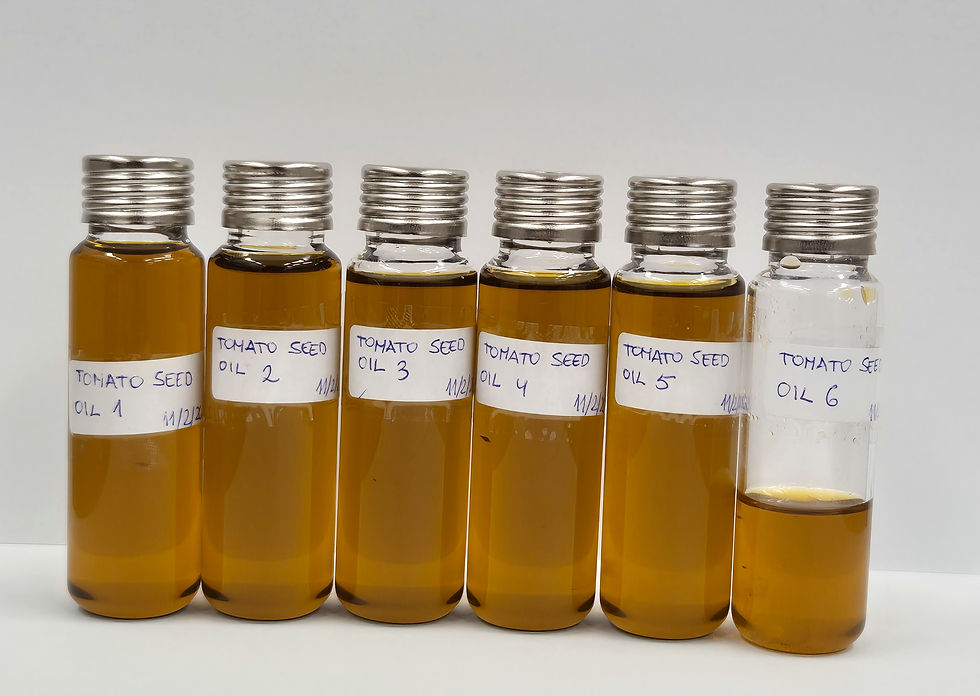
Tomato seeds are known as rich source of fatty acids especially polyunsatured fatty acids. Therofere, tomato seeds obtained during tomato concentrate production were separated from tomato pulp and drying on the the adequate moisture content (cca 10-12 % w/w). The cold pressing of seeds (Figure 1a) was chosen due to the fact that the highest oil quality can be obtained. After pressing obtained oil was purified and stored at - 18 °C in glass bottles (Figure 1b).
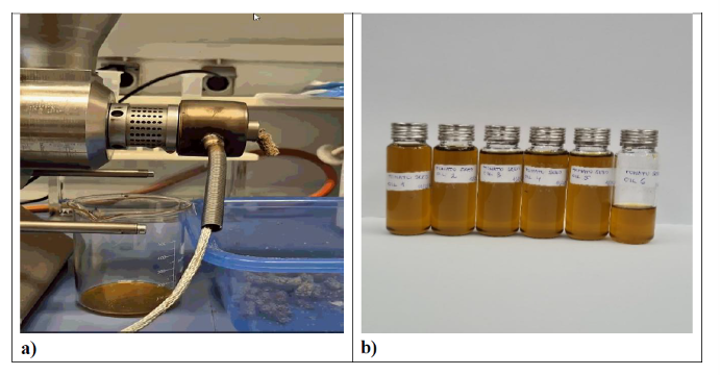
Figure 1. Screw press (a) for tomato oil production and obtained tomato seeds oil (b).
After purification of tomato seed oil, the compostion of fatty acids in this oil was determined by gas chromatographic method (Figure 2., Wychen et al. 2015)

Based on the results of the chromatigraphic analysis it was observed that tomato seeds oil is composed of saturated fatty acids (11.67 %), monounsaturated fatty acids (4.34 %) and polyunsatured fatty acids (83.99 %). It has to be pointed out that polyunsatuted fatty acids are also known as omega 3 and 6 fatty acids.
Literature
Wychen, S. Van; Ramirez, K.; Laurens, L.M.L. Determination of Total Lipids as Fatty Acid Methyl Esters (FAME) by in Situ Transesterification: Laboratory Analytical Procedure (LAP); National Renewable Energy Laboratory (NREL), Golden, CO, USA, 2015.
WP3 - Midstream – Fermentation and Lipid Extraction activity
In WP3, tomato growing and processing residues were evaluated as feedstocks for the biotechnological production of microbial lipids. Researchers investigated pretreatment, enzymatic hydrolysis and yeast cultivation processes to convert tomato residues into valuable lipid-rich biomass. Several oleaginous yeast strains were tested, demonstrating promising results for microbial lipid production from tomato-derived feedstocks.
Lignocellulosic biomass represents a promising renewable resource for the production of biofuels and other high added value products. Therefore, tomato growing and processing residues were evaluated as a feedstock for biotechnological production of microbial lipids. At the start of this study, the composition of these raw materials was determined in order to define their potential for microbial lipids production. The pretreatment of tomato residues (tomato stalks and pulp) was performed by weak acid (up to 1 % v/m of sulphuric acid) in high pressure reactor at 180 oC with residence time of 10 muntes (Figure 1.).

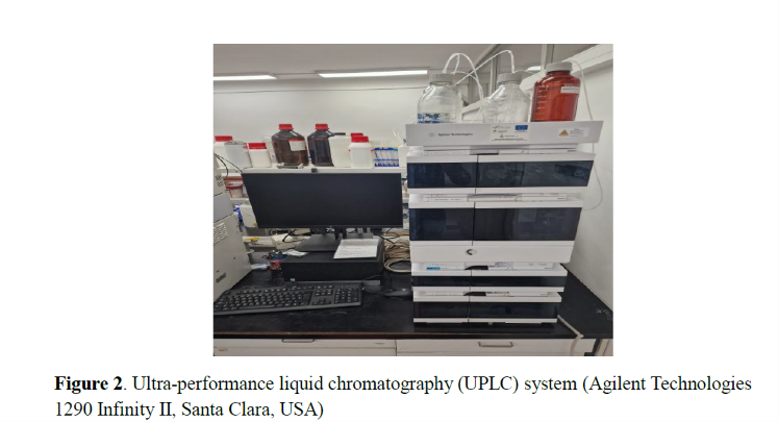
After pretreatment in the HPR liquid and solid residues were obtained. Liquid phase of pretreated feedstock was composed of xylose and arabinose (up to 12-15 g/L). However, solid part of feedstock has to be hydrolysed by enzyme cocktails (ViscoPract CX) to obtain fermentable sugars like glucose. After enzymatic hydrolysis of solid part of tomato residues obtained hydrolysate contained up to 40 g/L total sugars (mostly glucose and very low content of xylose). Hydrolysed tomato residues were used as a constituents of complex media for the cultivation of oleaginous yeasts like Meyerozyma guilliermondii, Yarrowia lipolytica and Lipomyces starkeyi in order to obtain microbial lipids. Oleaginous yeasts were grown in media with different C:N ratios by using glucose or xylose as a carbon source under microaerobic conditions. During these cultivations, biomass formation and carbon source consumption were monitored by liqiud chromatography (UPLC; Figure 2 and 3).

In this research, lipid content and fatty acids composition were determined by gas chromatography. Based on the obtained results microbial lipids production is strain- and substrate-dependent. The highest lipids content in yeast cells was observed by Meyerozyma guilliermondii on glucose 36.80 %, followed by Lipomyces starkeyi on xylose 29.70 %. Cultivations of Yarrowia lipolytica on both carbon sources (glucose and xylose) showed the lowest lipids content in yeast biomass. Furthermore, it has to be pointed out that fatty acid composition in microbial biomass is strain and substrate depended. In case of Meyerozyma guilliermondii following fatty acids composition during cultivation on medium with glucose as a carbon source was observed: saturated fatty acids (24.25 %), monounsaturated fatty acids (20.03 %) and polyunsatured fatty acids (55.72 %).
These activities contribute to the development of integrated biorefinery solutions that maximise the value of tomato residues while supporting the circular bioeconomy objectives of the ToFuel project.
Contributor: Božidar Šantek, UNIZAG-PBF, HR