1st Project Press Release | June 2026: Horizon Europe Project ToFuel Enters Implementation Phase to Develop Sustainable Aviation Fuel from Tomato Residues

Updated: Jun 29
Graz, Austria, 23 June 2026. Following the successful Kick-off Meeting held in Graz, Austria, on 3–4 February 2026, the Horizon Europe project ToFuel – An Integrated Biorefinery for Sustainable Aviation Fuel Production from Tomato Residues has entered its implementation phase.

© TU Graz, 2026
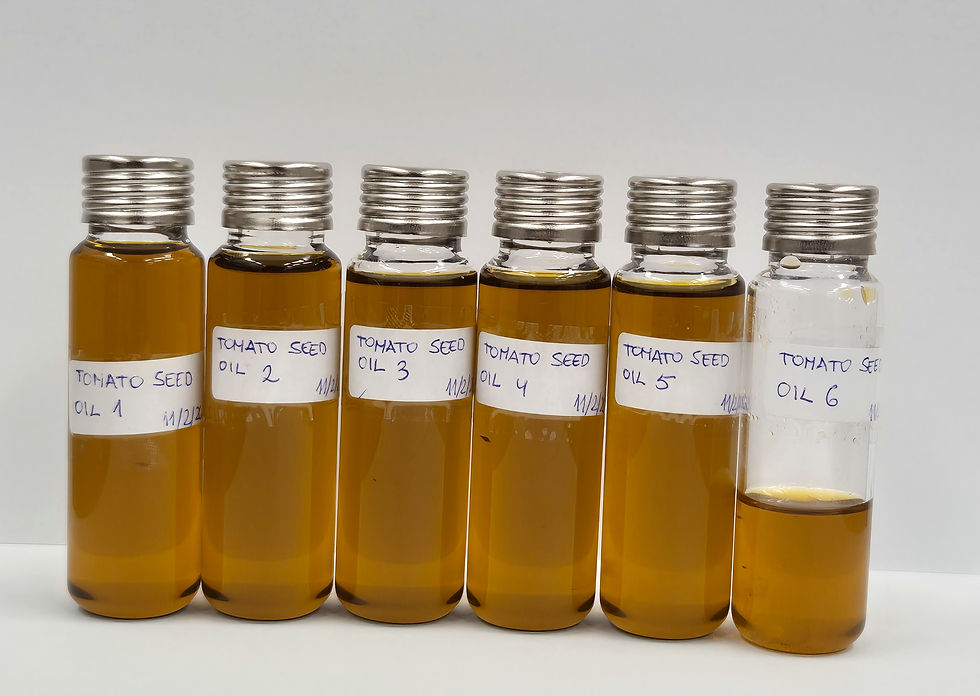
Funded by the European Union’s Horizon Europe Research and Innovation Programme, ToFuel contributes to Europe’s climate-neutrality objectives by addressing aviation decarbonisation through circular bioeconomy-based fuel production. The total project budget amounts to €3.5 million over four years. The project is coordinated by Technische Universität Graz (TU Graz, Austria) and develops an integrated biorefinery concept that converts tomato residues into Sustainable Aviation Fuel (SAF), as well as fertiliser, animal feed and nutritional oils.
Worldwide, tomatoes are the second most-consumed vegetable after potatoes and the European Union is the third largest producer, harvesting around 17 megatonnes annually. Tomato production generates significant quantities of residual biomass that are currently often disposed of at high cost. At the same time, the availability of Sustainable Aviation Fuels derived from renewable raw materials is critical for reducing CO₂ emissions from aviation.
“According to estimates, the EU-wide amount of tomato pomace could cover around three percent of the Sustainable Aviation Fuels needed in Europe by 2030,” said Marlene Kienberger, Project Coordinator, TU Graz.
ToFuel investigates two advanced fractionation technologies, extrusion and hydrothermal liquefaction, to enable efficient microbial conversion of biomass into lipids and bio-oil. The resulting bio-oil is purified and upgraded to aviation fuel using the HEFA route. These processes are jointly developed by TU Graz (Austria), LNEG (Portugal), the University of Zagreb (Croatia) and the University of Leoben (Austria).
The first year of the project focuses on biomass fractionation using two advanced technologies: hydrothermal liquefaction and extrusion. Parallel activities include microbial fermentation, lipid extraction, bio-oil purification and sustainability assessment, laying the foundation for the future scale-up and validation of the integrated biorefinery concept.
The technologies will be gradually scaled up to pre-industrial level. In parallel, the project analyses the ecological, economic and social impacts of the proposed biorefinery concept and explores new income opportunities for food processing industries.
© Lunghammer, TU Graz
The project brings together eleven partners from seven European countries. In addition to TU Graz as coordinator, the consortium includes: LNEG (PT), University of Zagreb (HR), Vienna University of Technology (AT), Lappeenranta University of Technology (FI), University of Leoben (AT), Fraunhofer-Gesellschaft (DE), Mutti S.p.A. (IT), Podravka prehrambena industrija d.d. (HR), European Sustainable Energy Innovation Alliance (ESEIA, AT) and Energy Efficiency in Industrial Processes ASBL (EEIP, BE).
Download the press release:
Contact:
Marlene KIENBERGER | Project Coordinator
Assoc.Prof. Dipl.-Ing. Dr.techn.| TU Graz | Institute of Chemical and Environmental Engineering
E-mail: tofuel@tugraz.at | Website: https://www.tofuel-project.eu/
This project has received funding from the European Union’s HEU research and innovation programme under grant agreement No 101235233. Views and opinions expressed are however those of the author(s) only and do not necessarily reflect those of the European Union. Neither the European Union nor the granting authority can be held responsible for them.